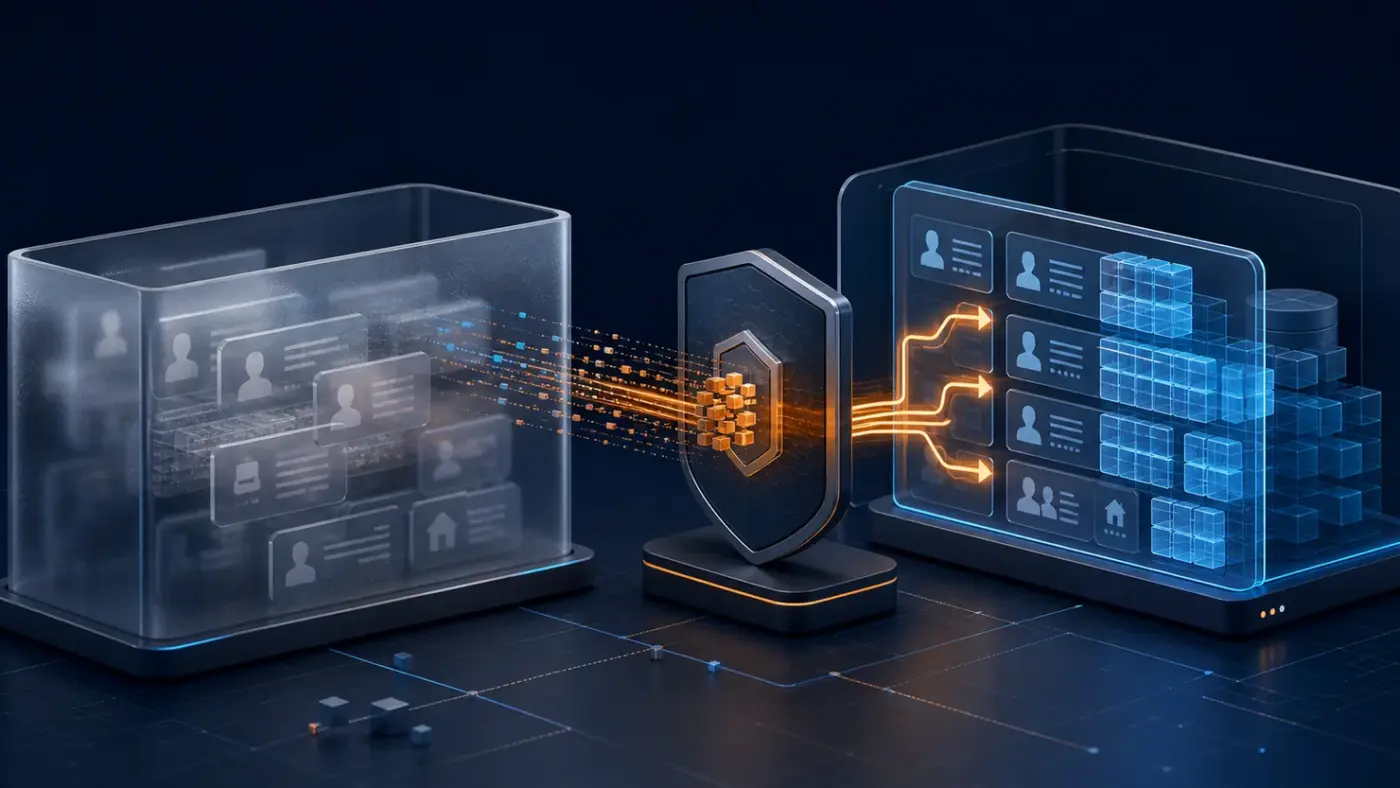
With the Summer ’26 release, Salesforce makes a striking choice: Data Mask & Seed becomes part of the standard platform. What was previously an additional solution will now be available to a much larger group of organizations.
For Salesforce administrators, developers and project owners, this solves a problem that almost every project encounters sooner or later: how do you ensure usable sandboxes without unnecessary privacy risks?
Why sandbox data is often a risk
A sandbox is intended for safe development, testing and experimentation. In practice, however, sandboxes are regularly filled with production data.
This means that names, email addresses, telephone numbers and sometimes even sensitive personal data become available in environments where less strict access controls apply than in production.
From a GDPR perspective, this is difficult to defend. At the same time, developers want realistic data to properly test functionality.
A tension arises there: secure data is often not usable, usable data is often not safe.
What does Data Mask & Seed do?
Data Mask & Seed combines two functions that were previously often solved with separate tooling.
Data Mask
Data Mask replaces sensitive data with fictitious values while keeping the data structure intact.
For example, a name remains a name, an email address remains an email address and a telephone number remains a telephone number. Relationships between records are preserved, allowing processes and automations to be tested without revealing real personal data.
Data Seed
With Data Seed, organizations can generate test data in a controlled manner.
Instead of manually creating accounts, contacts, opportunities, or cases, Salesforce can automatically build datasets that are immediately usable for development, acceptance testing, and demos.
What’s new in Summer ’26?
The most interesting addition is the automatic detection of personal data.
Salesforce can identify fields that may contain personal information, including custom fields added over the years.
This makes it easier to identify risks and reduces the chance that sensitive data ends up in a sandbox unnoticed.
In addition, the generation of test data has been further integrated into the platform, resulting in less dependence on external tools or custom solutions.
What does this mean for organizations?
Less GDPR risk
Data is structurally masked before users interact with it in test environments.
This makes it easier to support internal compliance and audit requirements.
Faster development
Developers can work directly with data sets that are representative of production, without spending hours building test scenarios.
More consistent test results
When teams use the same generated data sets, tests become more reproducible and errors are easier to analyze.
Where are the boundaries?
As is often the case with new Salesforce functionality, it is important to have realistic expectations.
Data Mask & Seed does not automatically replace a complete test data strategy.
Complex integrations, external systems and exceptional business processes often still require additional configuration or customization.
It also remains important to check which users have access to sandboxes. Masked data reduces risks, but does not replace good access management.
Who is this interesting for?
Data Mask & Seed is especially interesting for organizations that:
- Perform sandbox refreshes regularly.
- Working with personal data or sensitive customer information.
- Actively further develop Salesforce.
- Have multiple developers or implementation partners.
- Must be able to seriously substantiate compliance and audit requirements.
Conclusion
Salesforce making Data Mask & Seed available as standard functionality is more than a small platform improvement. It lowers the threshold for making sandboxes more secure and usable.
For many organizations, this means less manual work, fewer privacy risks and a more efficient development process.
The functionality does not solve every issue surrounding test data, but makes an approach that was previously mainly available for larger organizations now accessible for almost every Salesforce environment.